Hardwood Gapping in Winter and Cupping in Summer? Why Humidity Swings Do It
August 29, 2026
| Factor | Replacement (Insert) Windows | New Construction Windows |
|---|---|---|
| Existing frame | Anne | Evans |
| 2 | Bill | Fernandez |
| 3 | Candice | Gates |
| 4 | Dave | Hill |
Quick Answer: Hardwood floors gap in winter and cup in summer because wood constantly trades moisture with the air around it, and Michigan's swing from dry furnace heat to humid summer air pushes boards through their full range of movement every year. The National Wood Flooring Association recommends keeping indoor relative humidity between 30% and 50% and temperature between 60°F and 80°F year-round to hold wood flooring in its stable moisture range of roughly 6% to 9%. Hairline gaps that close up again by July are normal seasonal movement. Gaps that stay open, cupping that doesn't flatten by fall, or boards that feel soft or lift at the edges point to a moisture source, a subfloor problem, or an installation that wasn't built for how this climate actually behaves.
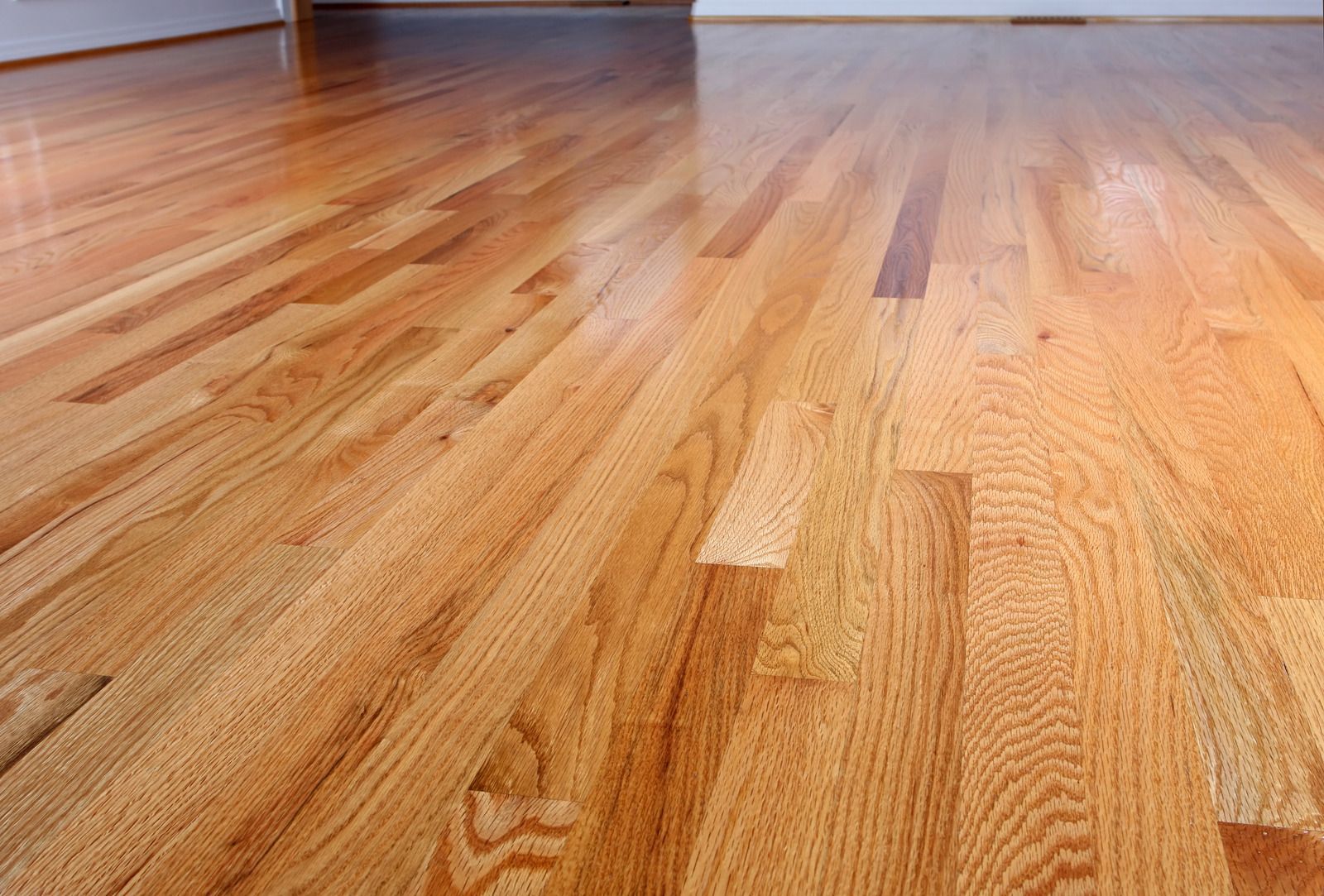
You notice it every January: a thin dark line running between boards in the hallway, wide enough to catch a sock. By March it's gone, and you forget about it until the following winter, when it's back in the same spot. Then in August the same floor looks slightly domed near the exterior wall, the middle of each board sitting a hair higher than the edges. Neither of these is random. Both are wood doing exactly what wood does when the air around it changes, and in a Michigan house that runs a furnace for five months and an air conditioner for three, that change is baked into the calendar.
Why Hardwood Moves With the Seasons
Wood is hygroscopic, which means it absorbs and releases moisture from the surrounding air until it reaches equilibrium with it. That equilibrium point is called equilibrium moisture content, or EMC, and it shifts with both relative humidity and temperature. When the air is dry, wood gives up moisture and shrinks. When the air is humid, wood pulls moisture in and swells. A solid hardwood board is manufactured and dried to roughly 6% to 9% moisture content, and it's built to stay dimensionally stable within that band.
Winter Dryness Pulls Boards Apart
Furnace-heated indoor air in a Michigan winter can drop well below 20% relative humidity if there's no added humidification, even though outdoor air is loaded with snow and moisture. Heating that cold outdoor air raises its temperature and crashes its relative humidity, which is why forced-air heat leaves skin dry, static electricity everywhere, and floorboards shrinking at the edges. As each board narrows slightly, the cumulative shrinkage across a run of flooring shows up as visible gaps, usually most noticeable along exterior walls and in rooms with supply registers nearby.
Summer Humidity Pushes Boards Together
By July, Lapeer County humidity regularly sits in the 60% to 70% range on muggy stretches. Wood absorbs that ambient moisture, boards swell, and because they're locked edge to edge with no room to expand, the swelling has to go somewhere. The face of the board bows upward at the center relative to its edges. That's cupping, and it's the direct mechanical result of a board expanding faster at the wetter bottom or edges than it can accommodate.
The Reference Range That Keeps Both In Check
According to NWFA guidelines, maintaining indoor relative humidity between 30% and 50% and temperature between 60°F and 80°F keeps wood flooring inside its target 6% to 9% moisture range, where movement stays minor and reversible. Outside that range, EMC calculations show equilibrium moisture content climbing above 12% once relative humidity passes roughly 65%, and dropping below 5% once relative humidity falls under 25%. Both ends are where visible problems start.
Normal Seasonal Movement vs. a Real Problem
Tip:
A cheap hygrometer placed on the floor of the room you're worried about, left for a week, tells you more than guesswork. If it's reading below 30% in January or above 55% in August, the humidity swing — not the floor — is the root cause, and a whole-house humidifier or dehumidifier addresses it at the source instead of chasing symptoms board by board.
Species, Board Width, and Installation All Change How Much You'll See
Not every hardwood floor moves the same amount for the same humidity swing, and the differences matter when you're deciding whether what you're seeing is expected or excessive.
Wider Boards Move More
A 2¼-inch strip floor and a 7-inch wide-plank floor made of the same species will experience the same percentage change in moisture content, but the wider board's absolute movement — the actual gap or cup you can see and feel — is larger, because there's simply more wood width to expand and contract. Wide-plank floors in a cold climate need a humidity control plan more than narrow strip floors do.
Species Matters
Some hardwoods, like hickory and hard maple, are naturally more reactive to moisture change than others, like white oak. If you're choosing a species for a Michigan home and you already know indoor humidity control is inconsistent, that's a real factor in the decision, not just a look-and-feel one.
Quartersawn and Engineered Options Move Less
Quartersawn boards are cut so the growth rings run more vertically through the board, which resists cupping better than plain-sawn material. Engineered hardwood, built in cross-laminated layers, is inherently more dimensionally stable across humidity swings than solid wood and is often the better call over a below-grade or slab-adjacent subfloor where moisture exposure is harder to control. This is one of the questions worth working through before flooring goes in over a basement slab or a room with known humidity swings.
Acclimation Before Installation Sets the Baseline
Flooring that wasn't allowed to acclimate to the home's actual living conditions before installation — sitting in the house at normal temperature and humidity for several days, not just stacked in a garage — starts life fighting the room's moisture level instead of matching it. That mismatch often shows up as more dramatic first-year movement than the floor will show in later years once it settles in.
Warning: Skipping proper acclimation, or installing wide-plank solid hardwood directly over a slab or crawlspace with no vapor barrier and no moisture testing, sets up a floor to fail its first full season. If a subfloor's moisture content is more than a couple of percentage points different from the flooring's moisture content at installation, cupping or gapping isn't a matter of if — it's a matter of how bad and how soon.
What Actually Controls the Swing in a Michigan House
Whole-House Humidification in Winter
A furnace-mounted humidifier sized to the house, run through the heating season, keeps indoor relative humidity from crashing into the teens on the coldest, driest weeks — the exact condition that produces the widest winter gaps.
Dehumidification or Air Conditioning in Summer
A properly sized air conditioner removes moisture as a byproduct of cooling, but only while it's running, and an oversized unit that cools the house quickly without running long enough won't pull out much moisture. In basements and other spaces where the AC doesn't run much because the space stays naturally cool, a standalone dehumidifier does the job the AC can't.
Consistent Monitoring, Not a One-Time Fix
A hygrometer that stays in the room, checked through a full year, tells you whether your humidity control setup is actually holding the 30% to 50% range or just getting close on average while spiking or crashing on the extremes.
Subfloor and Moisture-Source Checks Before Anything Else
No amount of whole-house humidity control fixes a floor that's absorbing moisture from below. If cupping or gapping is isolated to one room or one section of a room, that's the first place to look, not the thermostat.
Frequently Asked Questions
Why are my floors cold even when the heat is running?
Because the space below pulls warmth out of the floor faster than the furnace replaces it. The stack effect draws cold air up through subfloor gaps while heat conducts down through uninsulated joists, keeping the surface cold.
Will hardwood gaps close on their own once spring humidity comes back?
Usually, yes. Seasonal winter gaps often close as spring humidity rises and boards regain moisture. If gaps remain open through summer, however, they may indicate installation, subfloor, or moisture-related problems.
How wide of a gap between boards is considered normal in winter?
There is no universal measurement. Small, evenly distributed hairline gaps that appear during dry winter weather and close by late spring are generally normal. Larger or localized gaps deserve closer inspection.
Does engineered hardwood gap and cup less than solid hardwood?
Generally, yes. Engineered hardwood's layered construction provides greater dimensional stability than solid wood, making it better suited for basements, slabs, and homes where humidity levels fluctuate more throughout the year.
Can I fix cupped hardwood by sanding it flat?
Not while the boards remain wet. Sanding too soon can create crowning after the wood dries and shrinks. Allow the flooring to reach normal moisture levels and flatten naturally before considering sanding or refinishing.
What indoor humidity level should I aim for to protect hardwood floors?
Aim for approximately 30% to 50% relative humidity year-round, with indoor temperatures around 60°F to 80°F. Maintaining this range helps minimize hardwood expansion, contraction, gapping, cupping, and other moisture-related movement.
Is gapping or cupping a sign my subfloor has a moisture problem?
It can be, particularly when movement appears in one localized area instead of throughout the room. Plumbing leaks, crawlspaces, slabs, and exterior moisture can all affect flooring and should be checked.
Understanding Seasonal Hardwood Movement in Michigan Homes
Hardwood flooring naturally responds to changes in indoor moisture, so some seasonal movement is simply part of living with real wood in Michigan. Keeping indoor humidity reasonably consistent, monitoring problem areas, and allowing the floor to respond naturally can prevent minor winter gapping or summer movement from becoming lasting damage. The goal is not to eliminate movement completely, but to keep those changes predictable, limited, and reversible throughout the year.
For homeowners in Lapeer County & Attica, MI, Ross Construction & Build and Maintenance, with 40+ years of experience, understands how local seasonal conditions affect hardwood flooring. A floor that changes slightly with the seasons can remain beautiful and functional for decades when its installation, subfloor, moisture levels, and indoor environment work together. Recognizing that normal rhythm makes it easier to distinguish ordinary movement from signs that deserve closer attention.